
Traveling
with Thirsty:
An American Experience
Narrative Non-Fiction
Summary
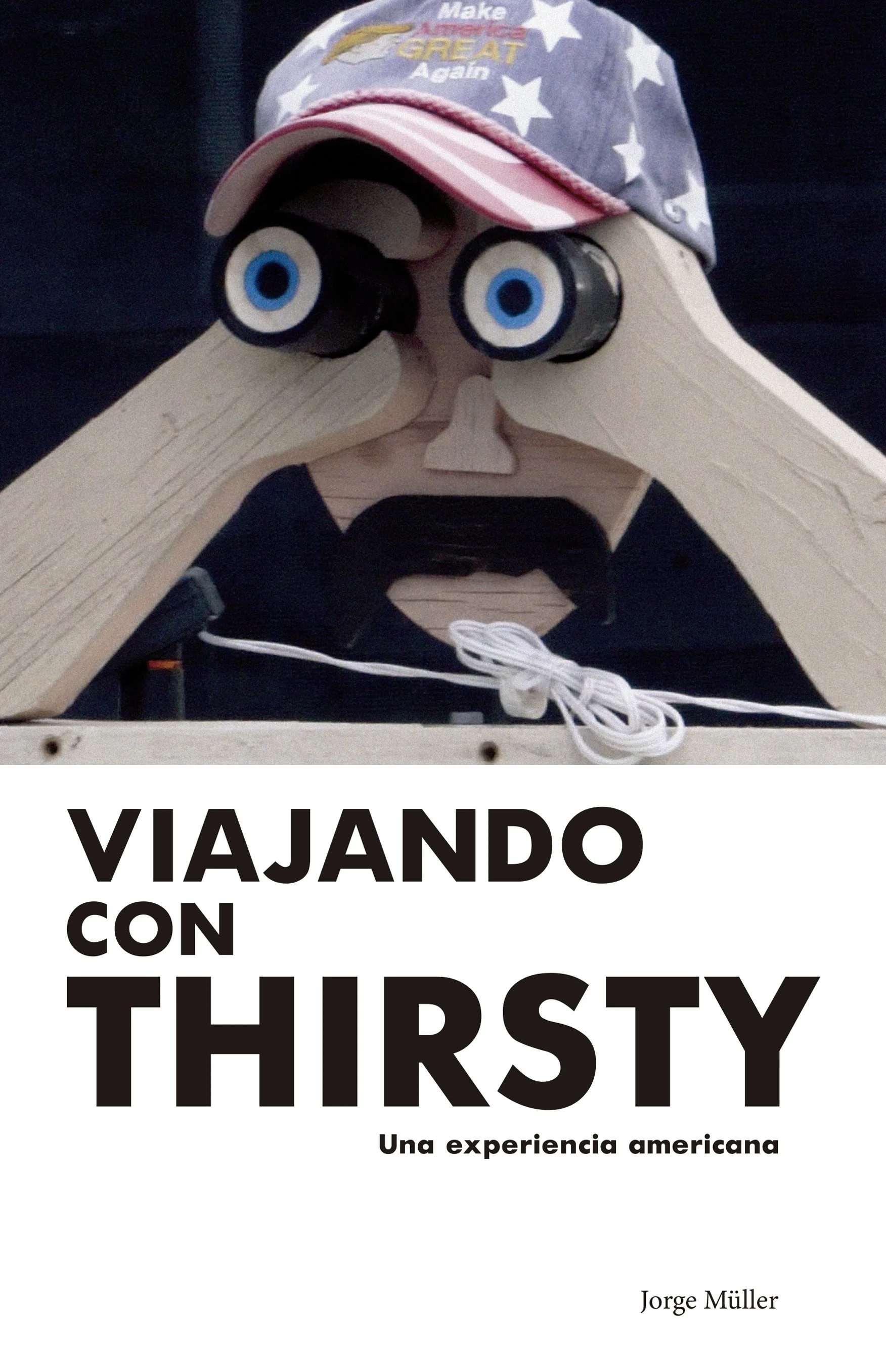
In the summer of 2024, a young man in his early thirties sets out to cross the United States in Thirsty, a Jeep that had seen better days, but which becomes both refuge and silent witness. On the road, he encounters the quiet realities of small-town America, and voices often left out of the national conversation in a country fractured by political and cultural divides.
Traveling with Thirsty is more than a travel book—it is an intimate and critical portrait of the United States today, and of the inner transformation that emerges from crossing it.
Market fit
A narrative non-fiction work that blends road-trip memoir with cultural and political reportage, offering an on-the-ground portrait of life in a polarized America. The book speaks to readers interested in understanding the country’s social fractures, cultural myths, and everyday realities beyond the headlines.
Positioned at the intersection of travel writing, cultural criticism, and personal narrative, the book will appeal to U.S. publishers seeking smart non-fiction that examines America from an informed European outsider’s perspective.
Target readers
Fans of narrative non-fiction, travel writing, long-form journalism, and cultural criticism, as well as readers interested in contemporary American society, politics, music, cinema, literature and history.
Comparable titles
Contemporary narrative non-fiction blending travel, politics and cultural reportage, in the tradition of John Steinbeck's Travels with Charley (1962) and Paul Theroux's Deep South (2015).
Style
Critical yet empathetic, avoiding ideological simplification in favour of observation, listening and nuance. Accomplishing a distinct voice shaped by an outsider's perspective, with a restrained poetic undertone in certain chapters.
Existing edition
Published in Spain by Intruso on November 9, 2025.
Paperback, 377 pages.
ISBN: 979-1399107708
Further information and audiovisual content can be found in the editorial dossier.
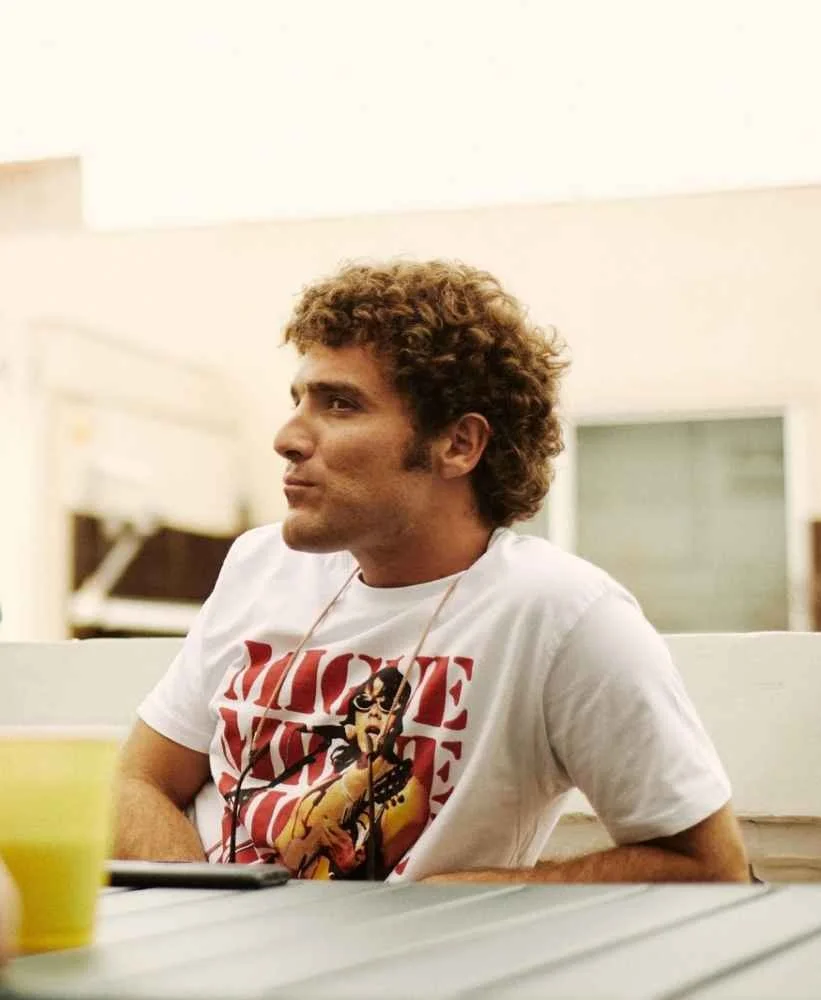
Jorge Müller (Bilbao, 1992) has spent most of his professional career working in the branding sector, which has allowed him to travel the world creating brands. From a young age, he cultivated a passion for travel, living in places such as the United States, India, and the United Kingdom, and undertaking numerous expeditions as a backpacker, by bicycle, and by van.
Although he has been writing travel chronicles and short narratives for over a decade, this is his first full-length work of non-fiction.
Press coverage
Click any item to open it
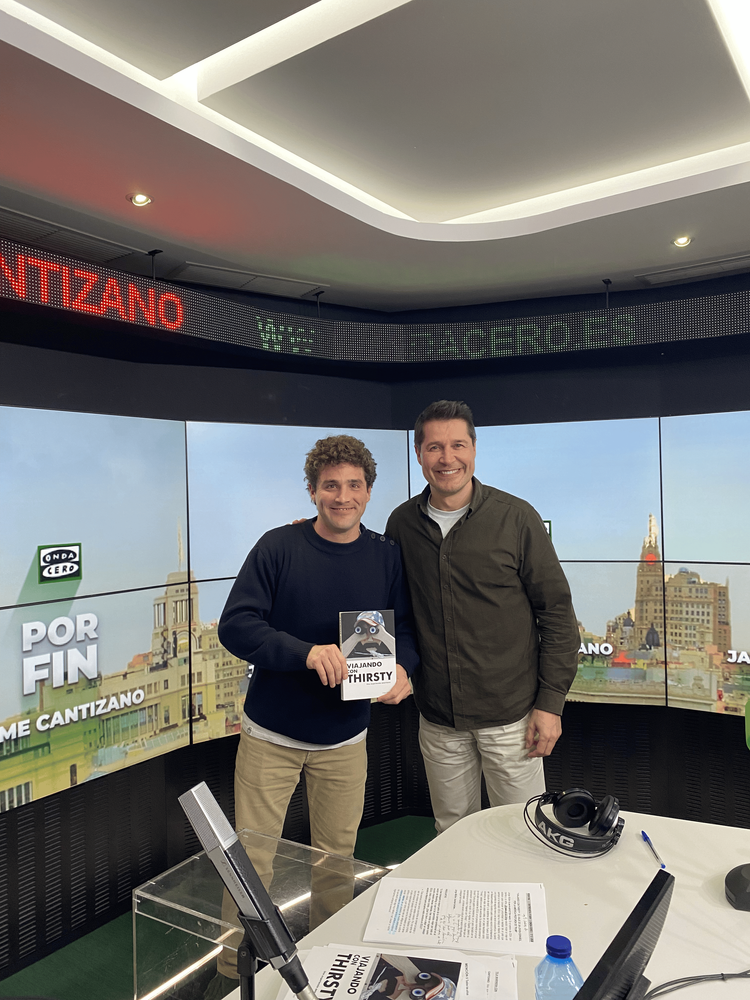 +
Onda Cero, with Jaime Cantizano
+
Onda Cero, with Jaime Cantizano
Sit-down on Onda Cero's leading weekend morning show.
Onda Cero · 2.28M daily listeners (network)
 +
El Correo
+
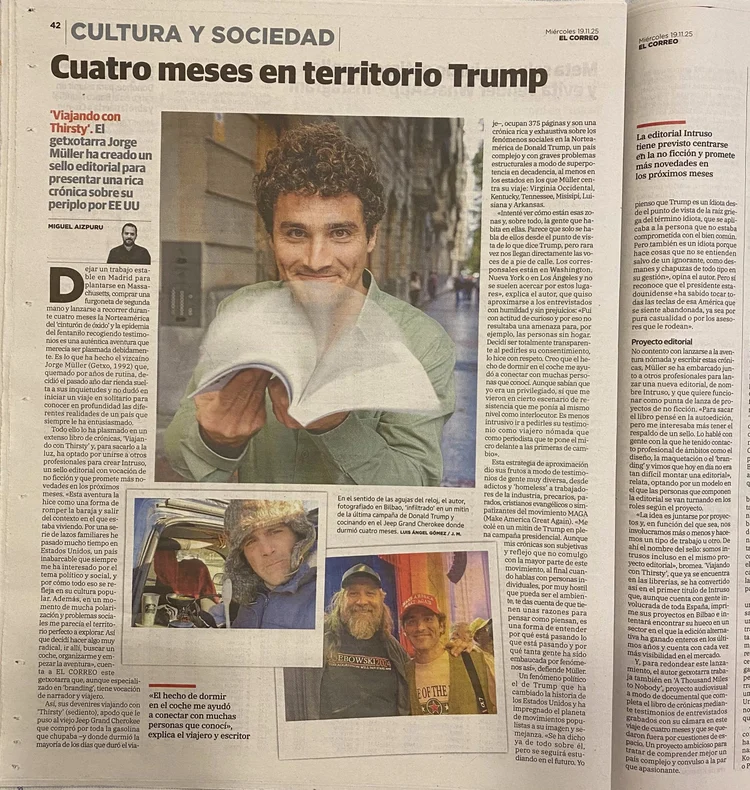
El Correo
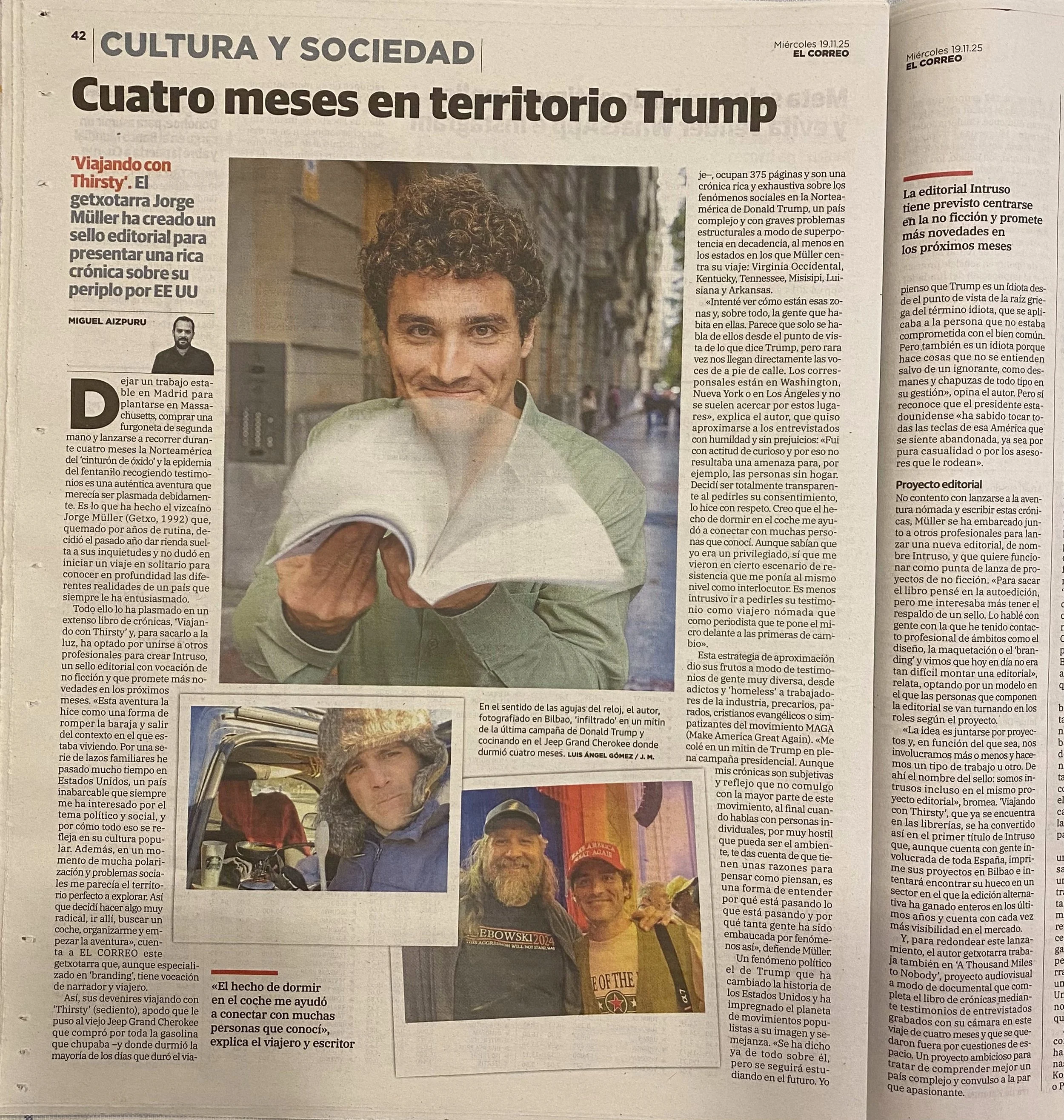
“Four Months in Trump Territory”
Full-page feature in the leading daily of the Basque Country.
“Family ties have taken me to the US often and for long stretches: a country too vast to take in whole, and one that has always interested me for its politics, its social fabric, and the way both surface in its popular culture. At a moment of deep polarization and social strain, it struck me as the perfect territory to explore.”
Read the article
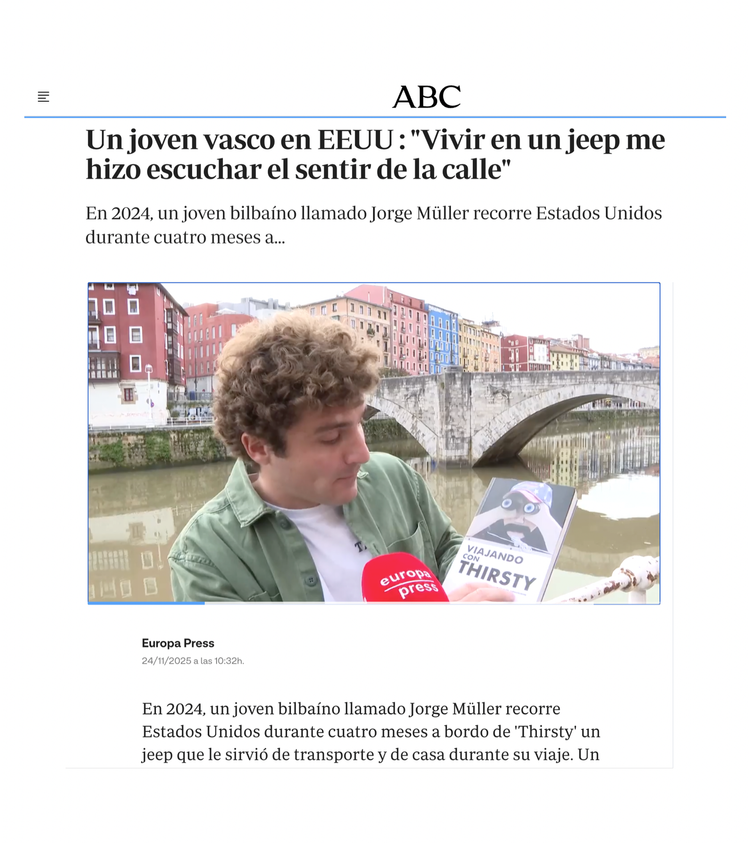 +
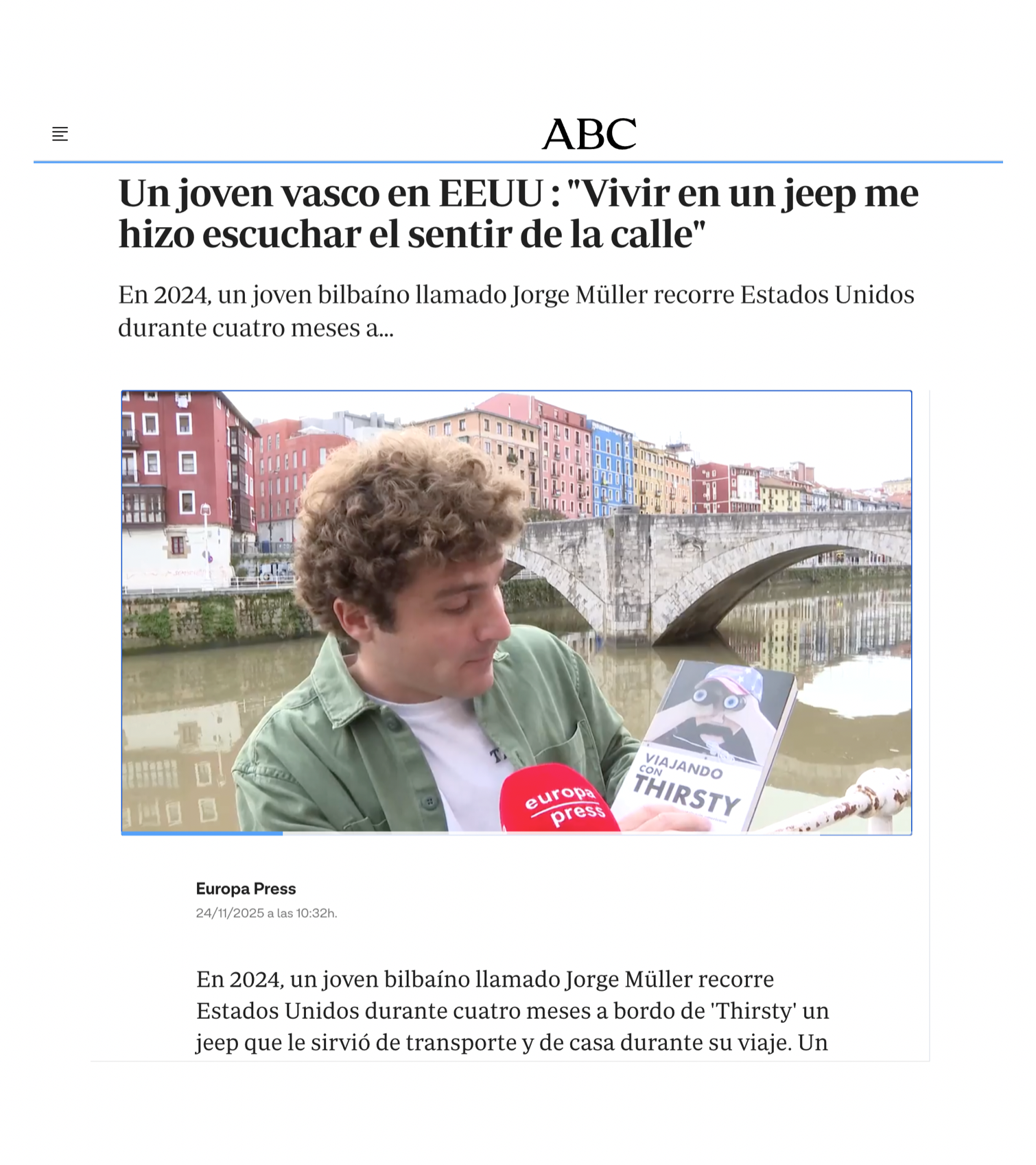
Europa Press · ABC
+
Europa Press · ABC
 +
Cadena SER, with José Antonio Ponseti
+
Cadena SER, with José Antonio Ponseti
Segment on the flagship travel show of Spain's most listened-to national network, anchored by Penguin Random House bestselling author José Antonio Ponseti.
Cadena SER · 4.89M daily listeners (network)
Listen to the full show
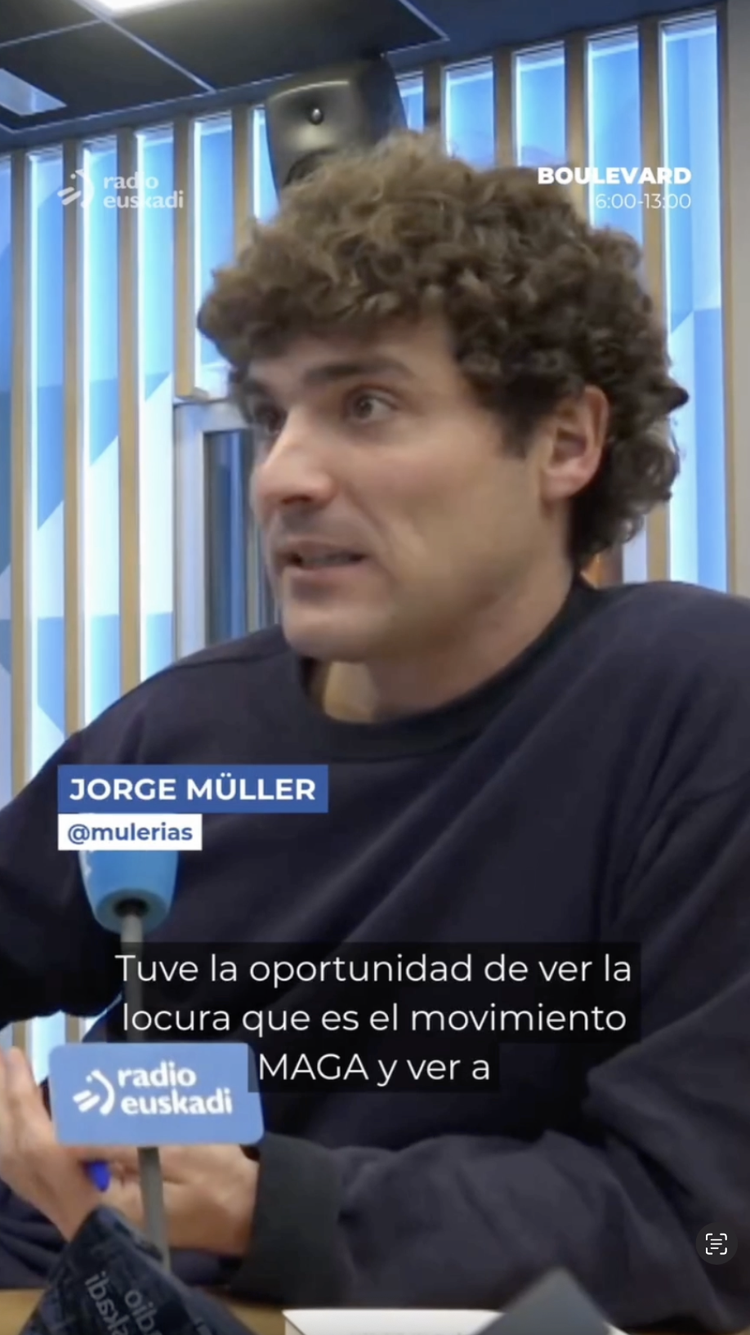 +
Radio Euskadi · Boulevard 2
+
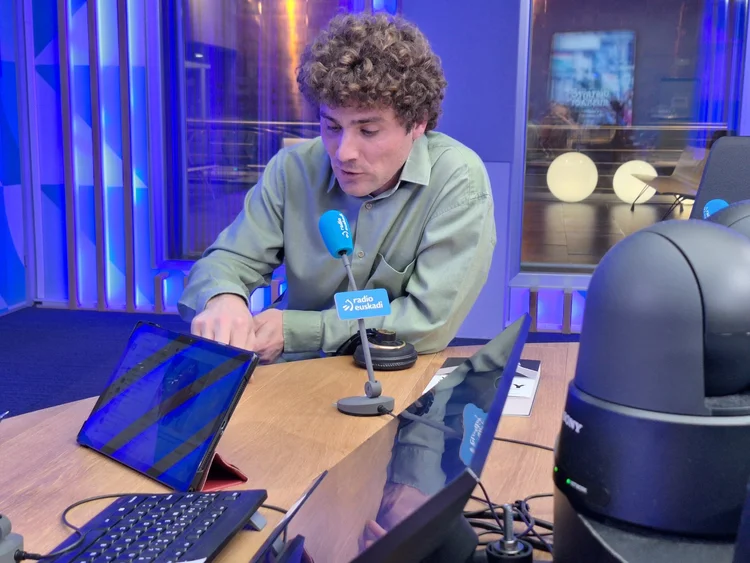
Radio Euskadi · Boulevard 2
Live studio interview on the Basque public broadcaster.
“I found fewer people in one camp or the other than I expected. What I found were people in a private struggle to get by, and to make their peace with a country they believe has lost its grip, and some of its sense of purpose.”
Radio Euskadi · 154K daily listeners (network)
 +
¡HOLA!
+
¡HOLA!

The book photographed in the hands of Antonio Riera, of the sustainable fashion label Ecoalf, in a feature published in ¡HOLA! — print and online.
See the post
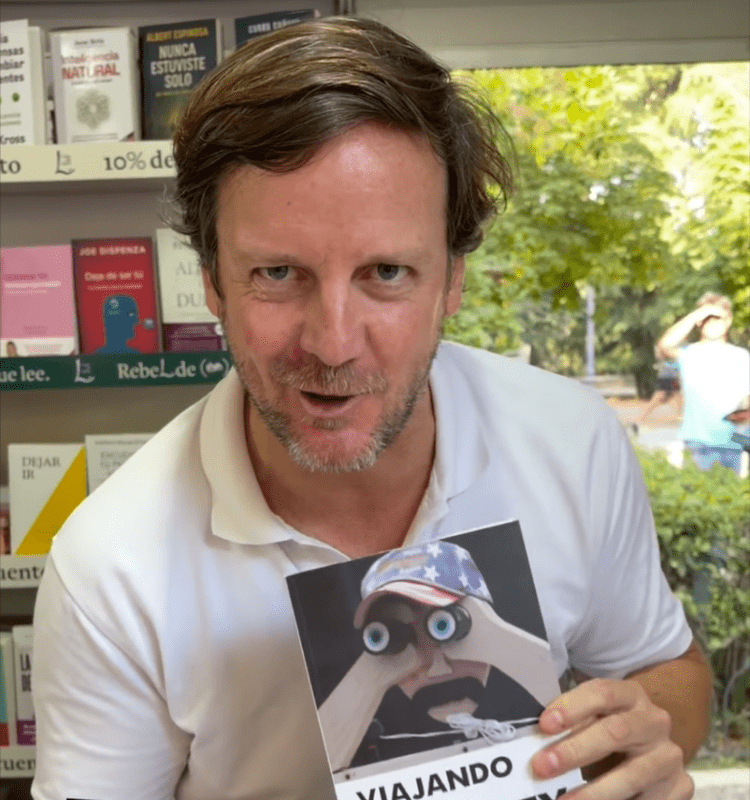 +
Rafa Tarradas
+
Rafa Tarradas
The bestselling Spanish novelist, published by Planeta, on camera about the book.
@rafatarradasbulto
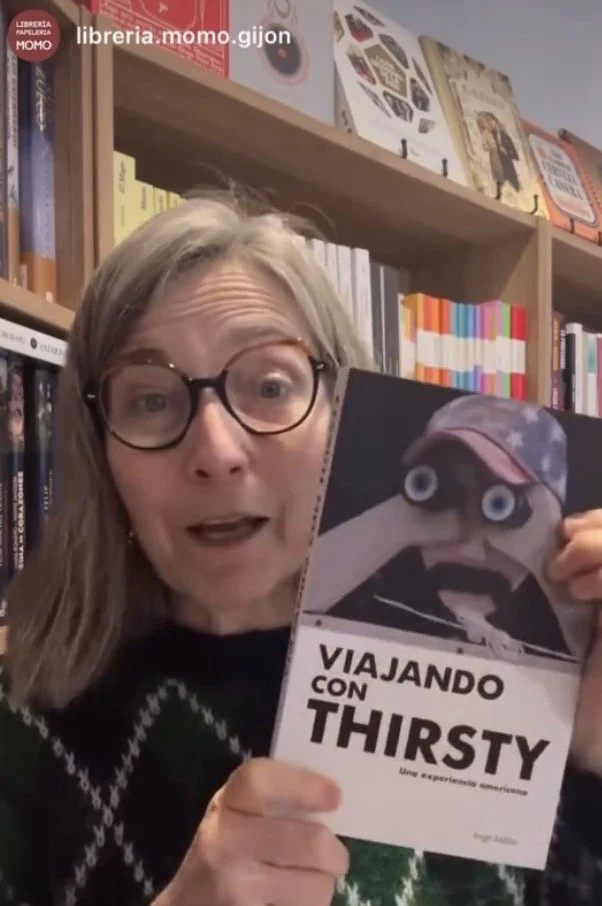 +
Librería Momo
+
Librería Momo
Video recommendation from one of Spain's most followed independent bookshops.
159K followers on Instagram
@libreria.momo.gijon
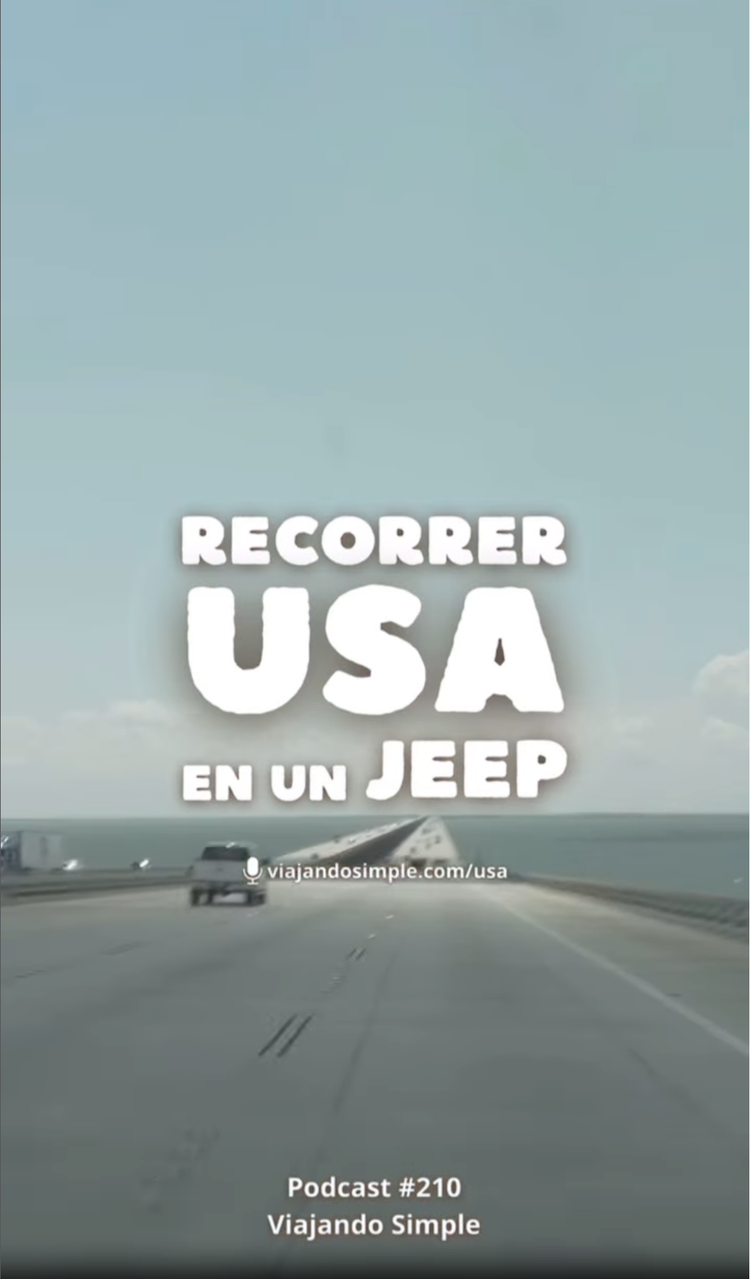 +
Viajando Simple
+
Viajando Simple
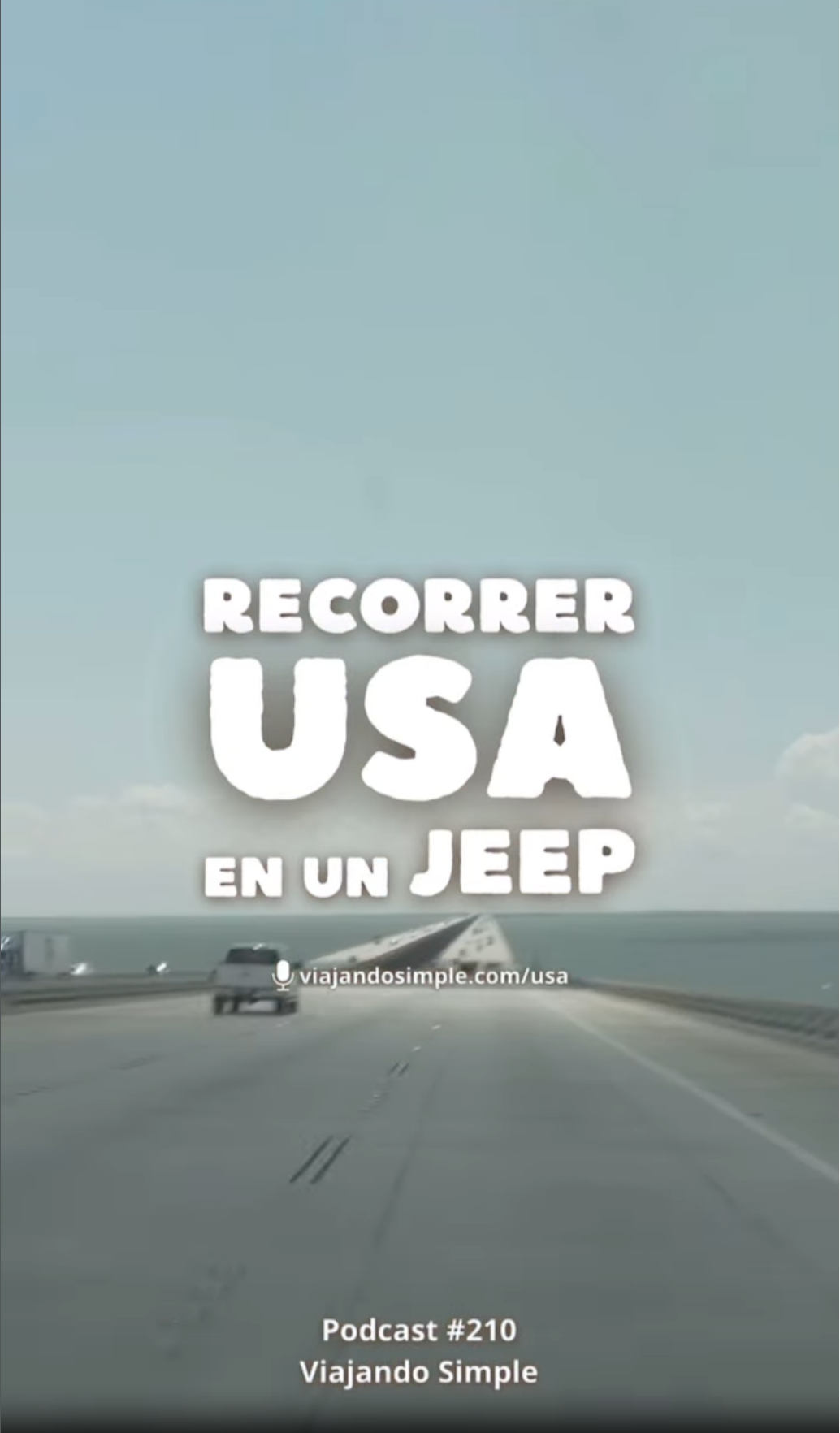
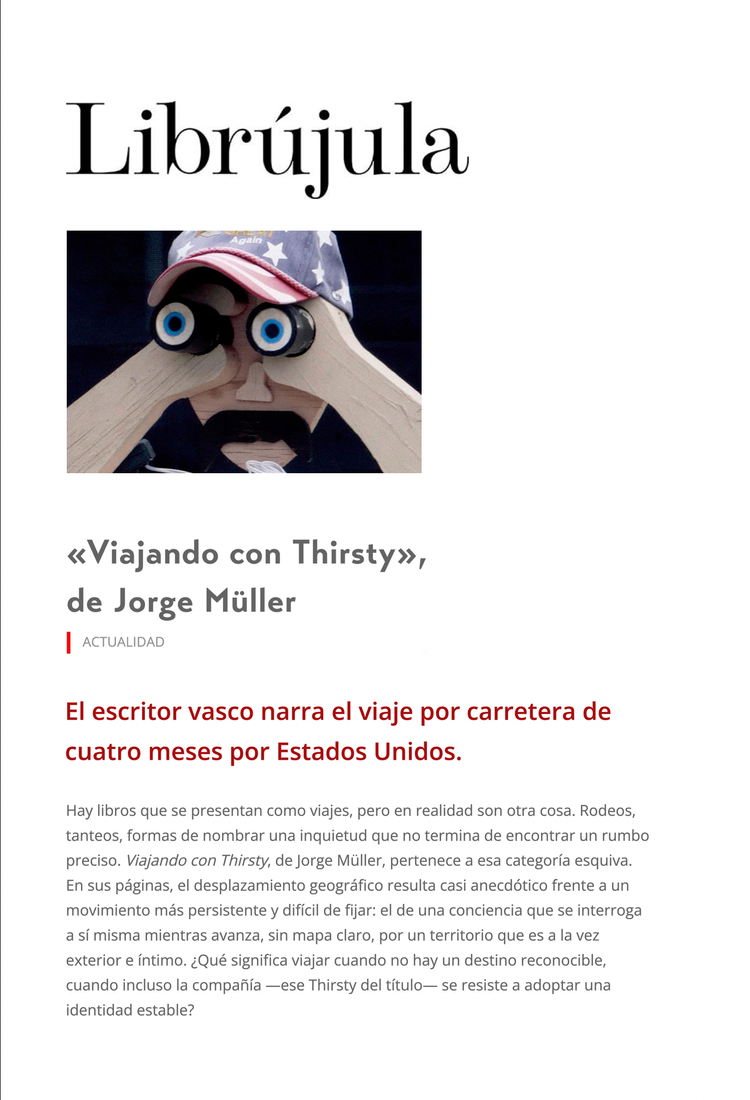
Episode #210, “Recorrer USA en un Jeep” — a 43-minute conversation on Spain's leading van-life podcast.
205K followers on Instagram · 25K subscribers on YouTube
Listen to the episode
 +
Librújula
+
Librújula
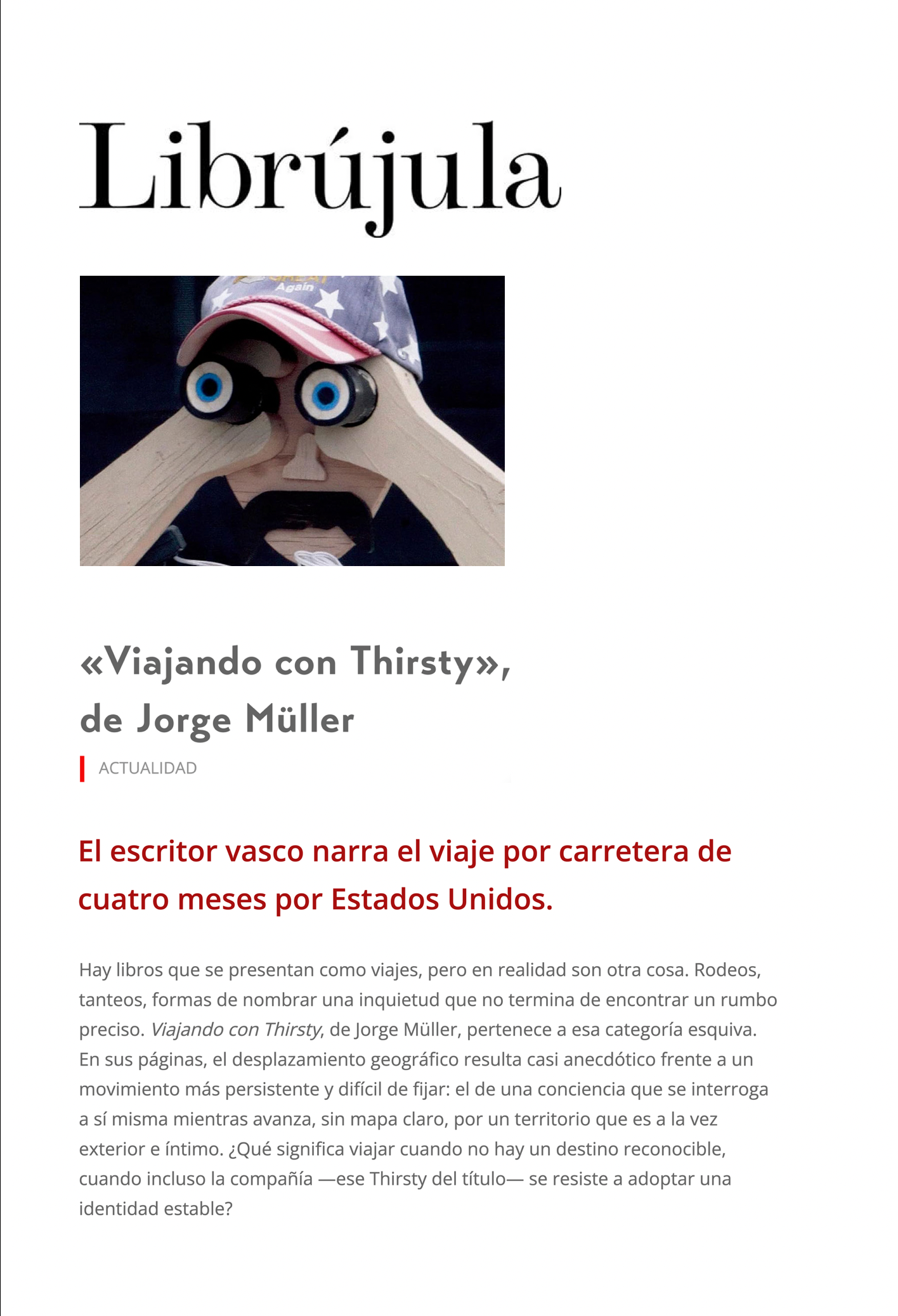
Review by Eduardo Garrido Pascual in one of Spain's reference outlets for books and reading.
“A recognizable voice and a coherent atmosphere built out of its own indecision… a voice that blurs, that doubts, that moves forward with no guarantees.”
Read the review
 +
Revista Hincapié
+
Revista Hincapié
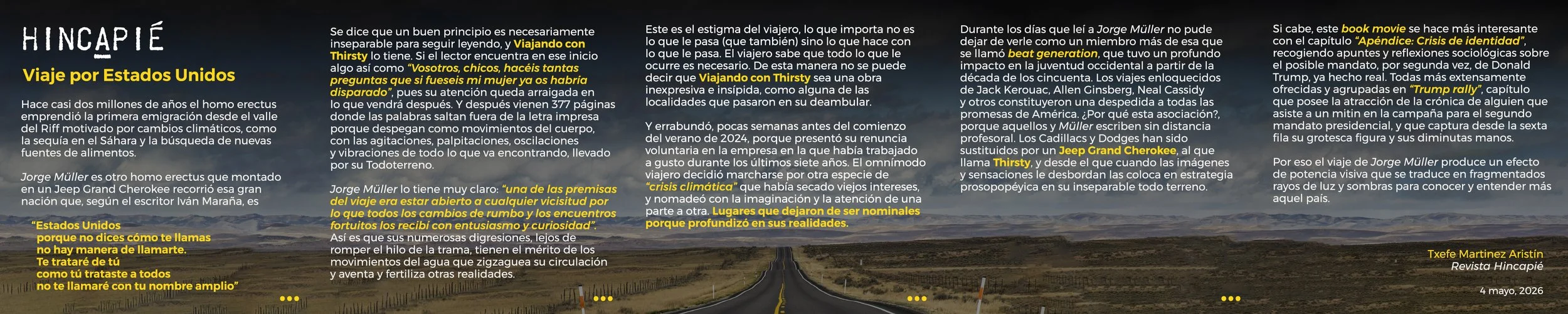
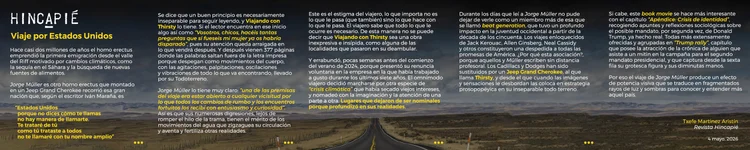
“Viaje por los Estados Unidos” — review by Txefe Martínez Aristín.
“Reading Jorge Müller, I couldn't stop seeing him as one more member of what came to be called the Beat Generation… the Cadillacs and Dodges replaced by a Jeep Grand Cherokee he calls Thirsty.”
Read the review
 +
Contra Cultural Magazine
+
Contra Cultural Magazine
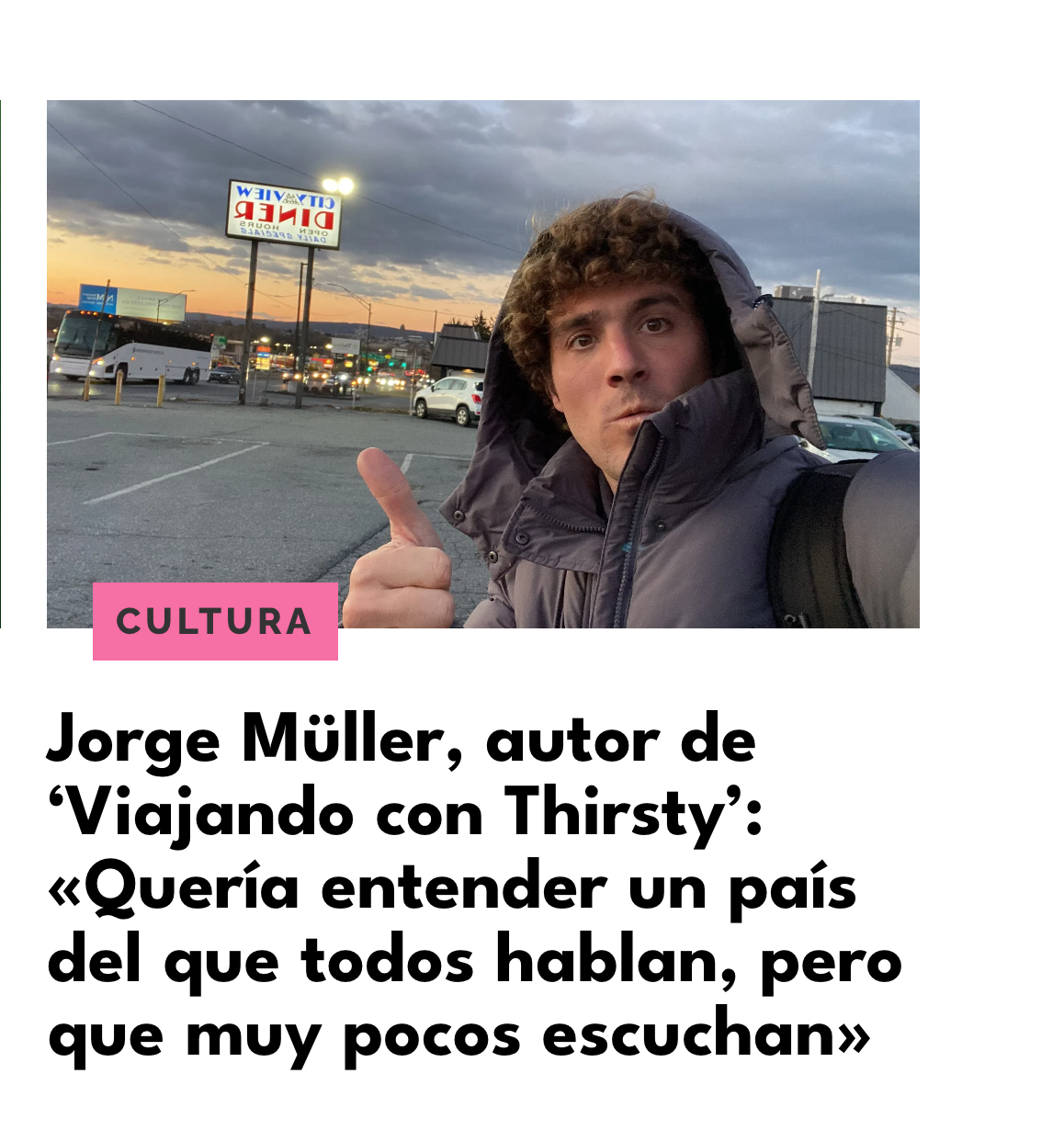
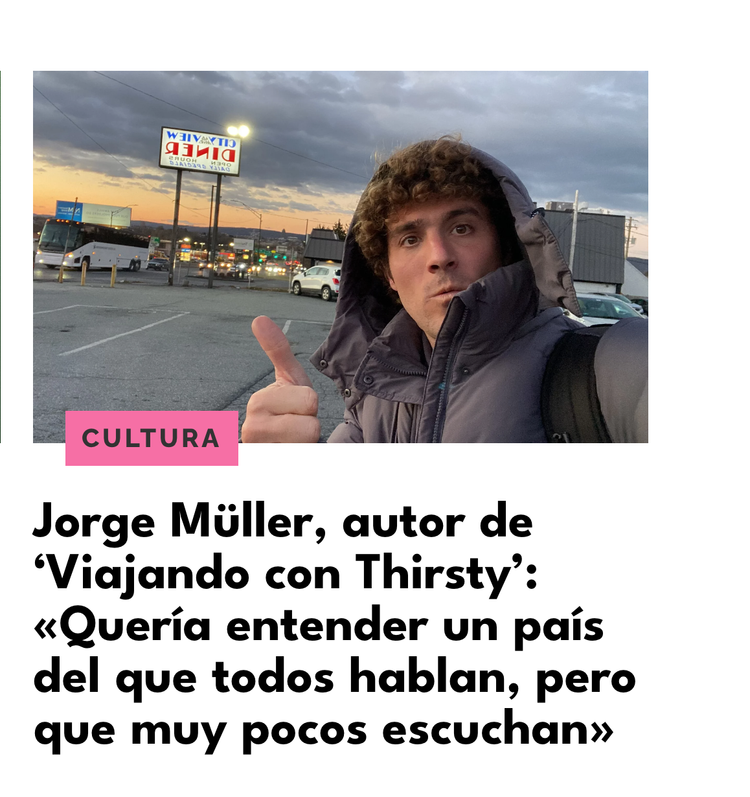
Feature interview by Max Sorribas.
“I wanted to understand a country everyone talks about, but that almost no one actually listens to.”
Read the interview
 +
Radio Euskadi · Distrito Euskadi
+
Radio Euskadi · Distrito Euskadi
Second conversation with Roge Blasco, the dean of Spanish travel broadcasting.
Radio Euskadi · 154K daily listeners (network)
Listen
 +
Levando Anclas · Roge Blasco
+
Levando Anclas · Roge Blasco
A long-form radio interview about the journey.
Listen
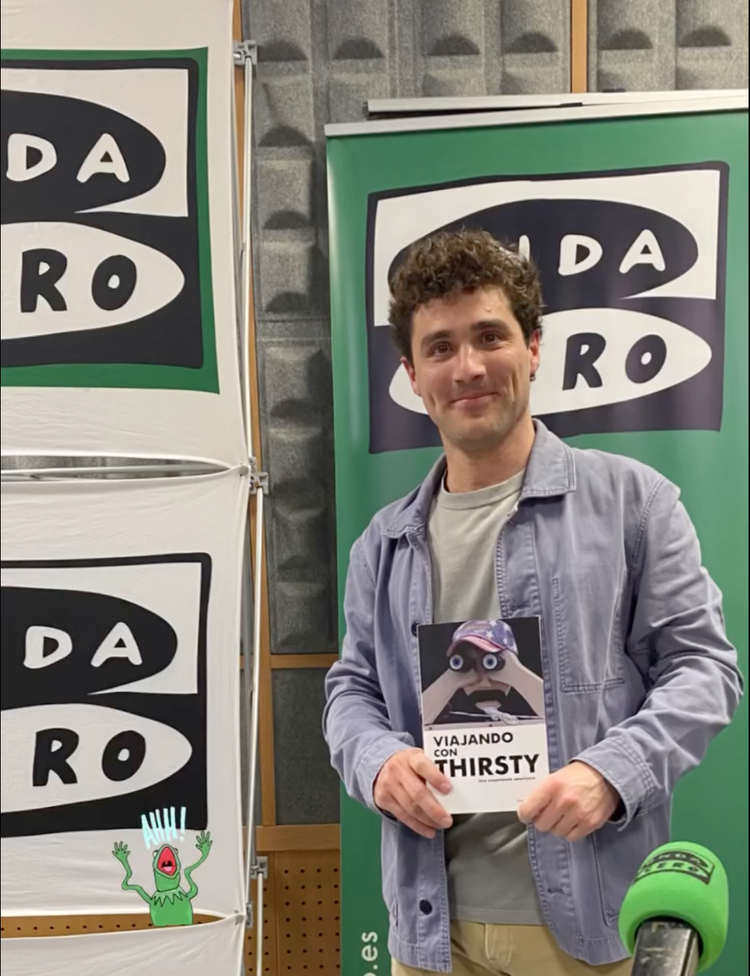 +
Onda Cero · La Brújula Euskadi
+
Onda Cero · La Brújula Euskadi
Regional edition of Onda Cero's evening news programme.
Onda Cero · 2.28M daily listeners (network)
Quotes translated from the original Spanish. Audience figures: EGM network daily reach, Spain.
Book fairs & events
Click any item to open it
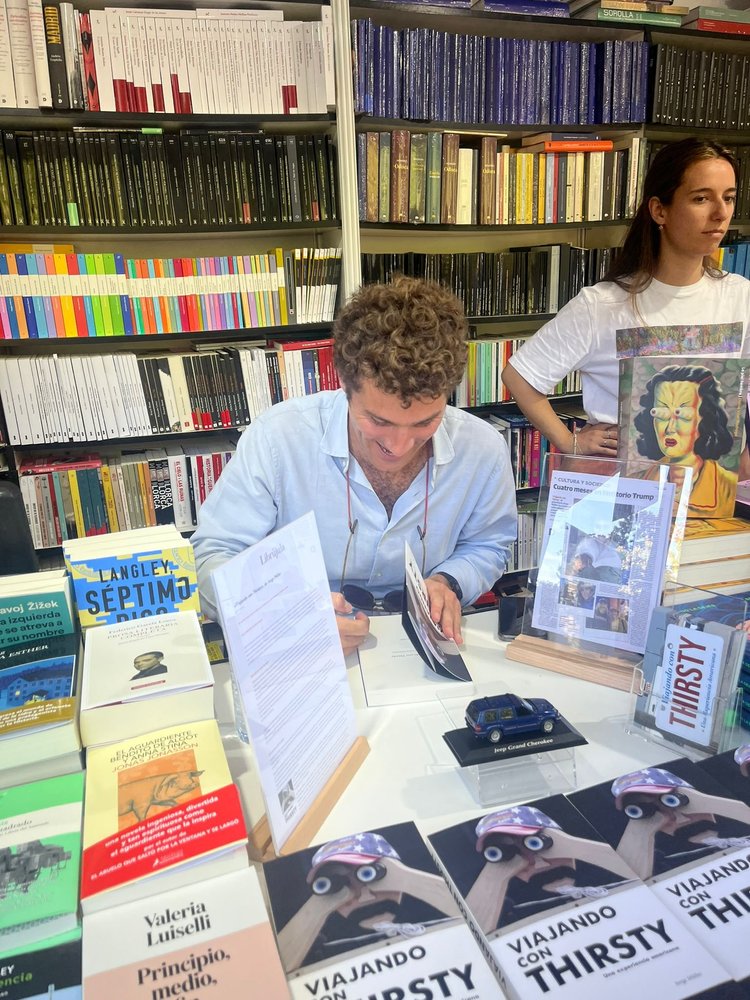 +
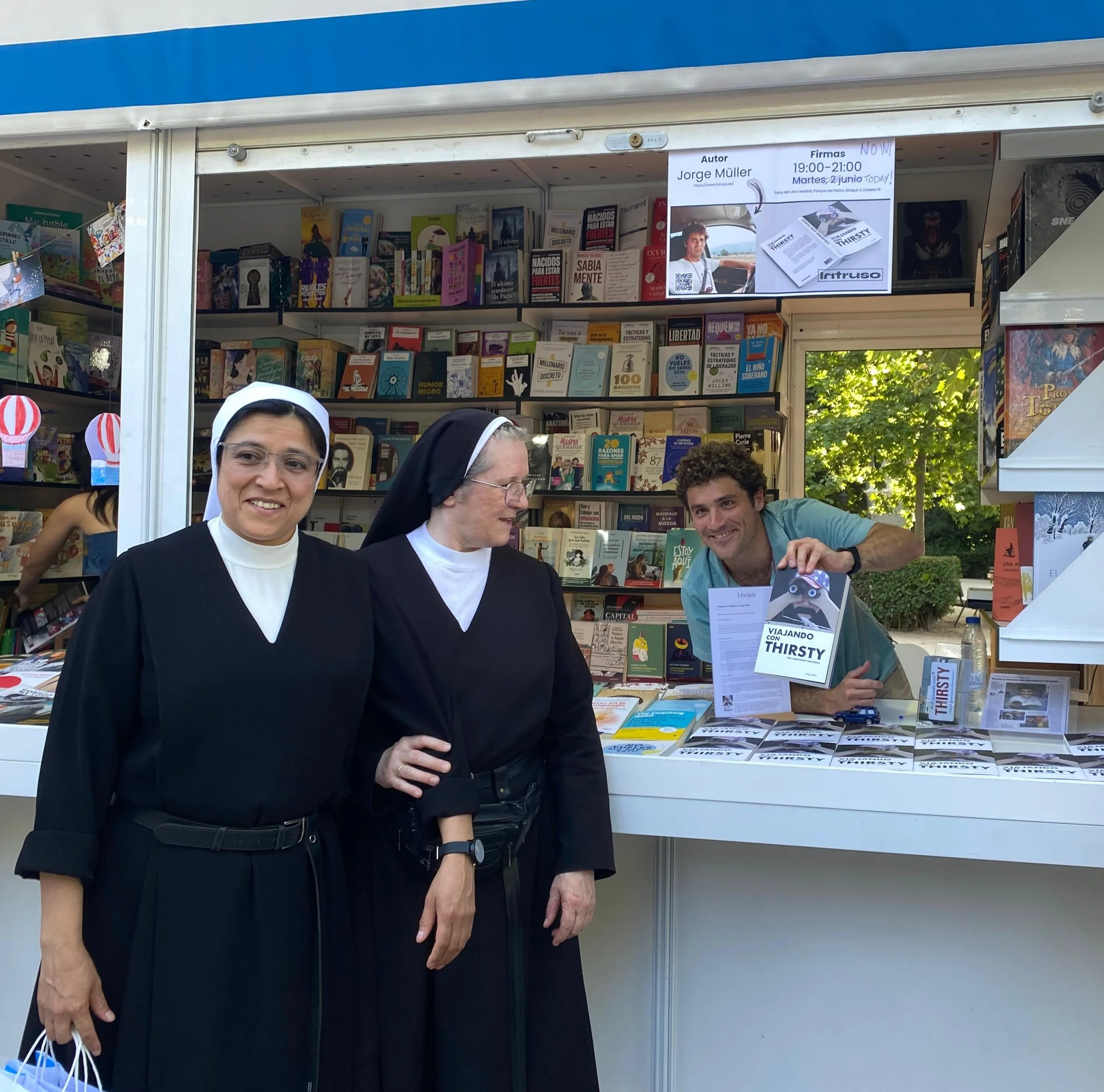
Feria del Libro de Madrid — Machado
+
Feria del Libro de Madrid — Machado
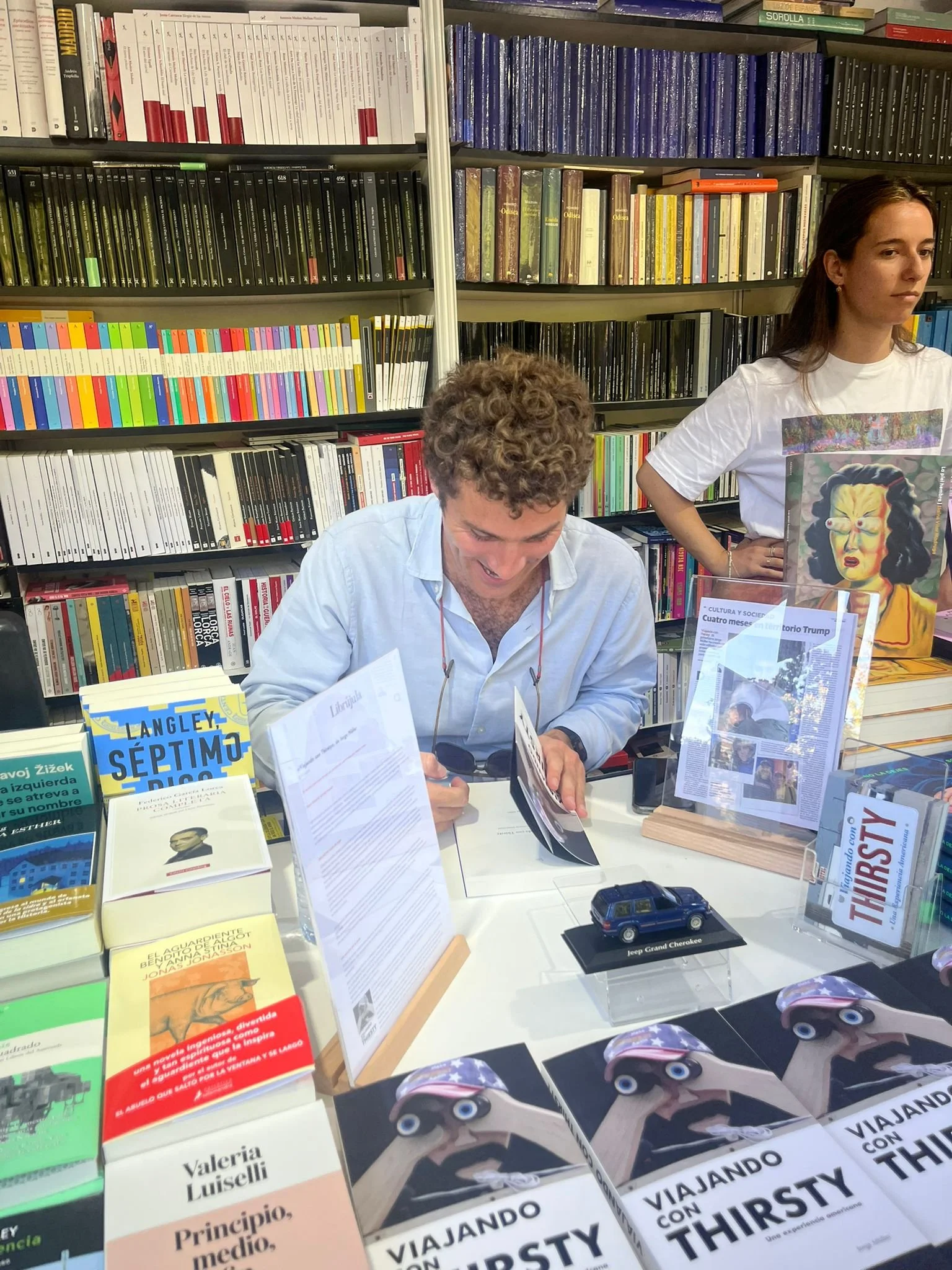
The book at the Machado Librería stand during the Madrid Book Fair.
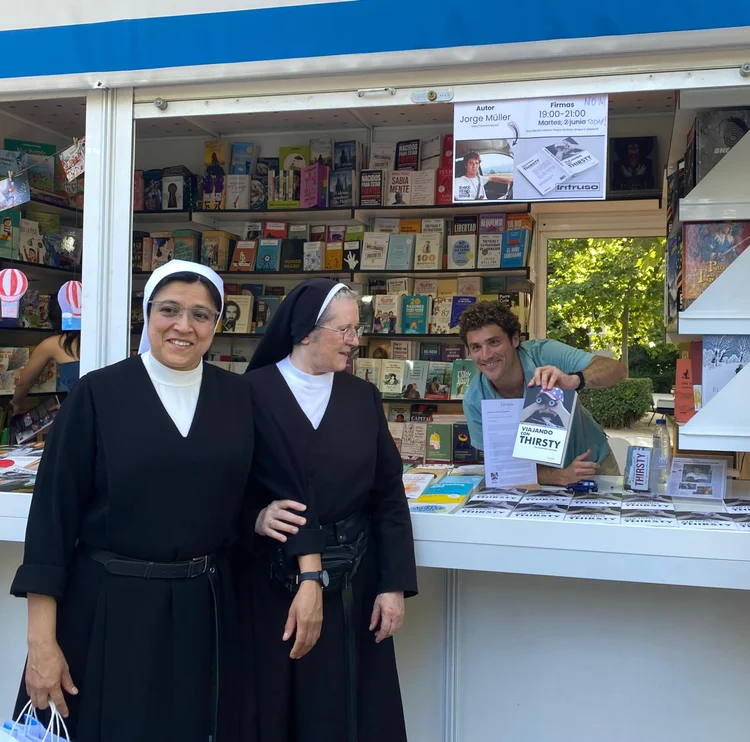 +
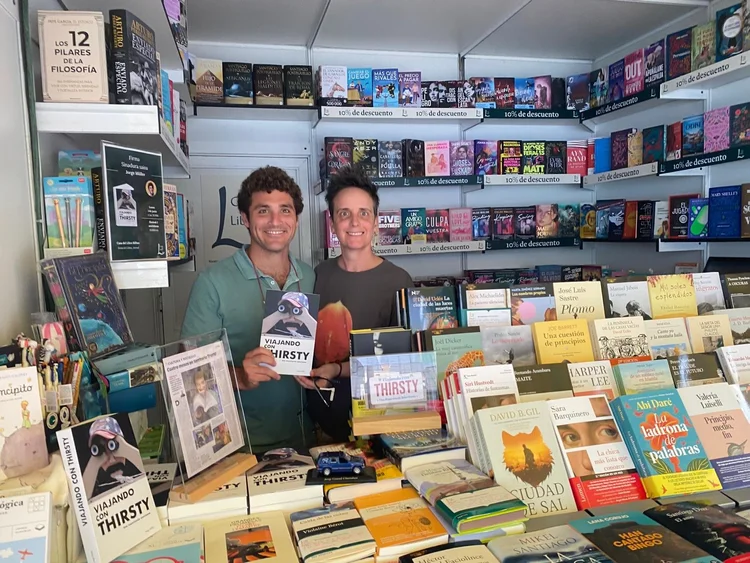
Feria del Libro de Madrid — ACL
+
Feria del Libro de Madrid — ACL
The book at the ACL Exclusivas stand during the Madrid Book Fair.
 +
Feria del Libro de Bilbao — Casa del Libro
+
Feria del Libro de Bilbao — Casa del Libro
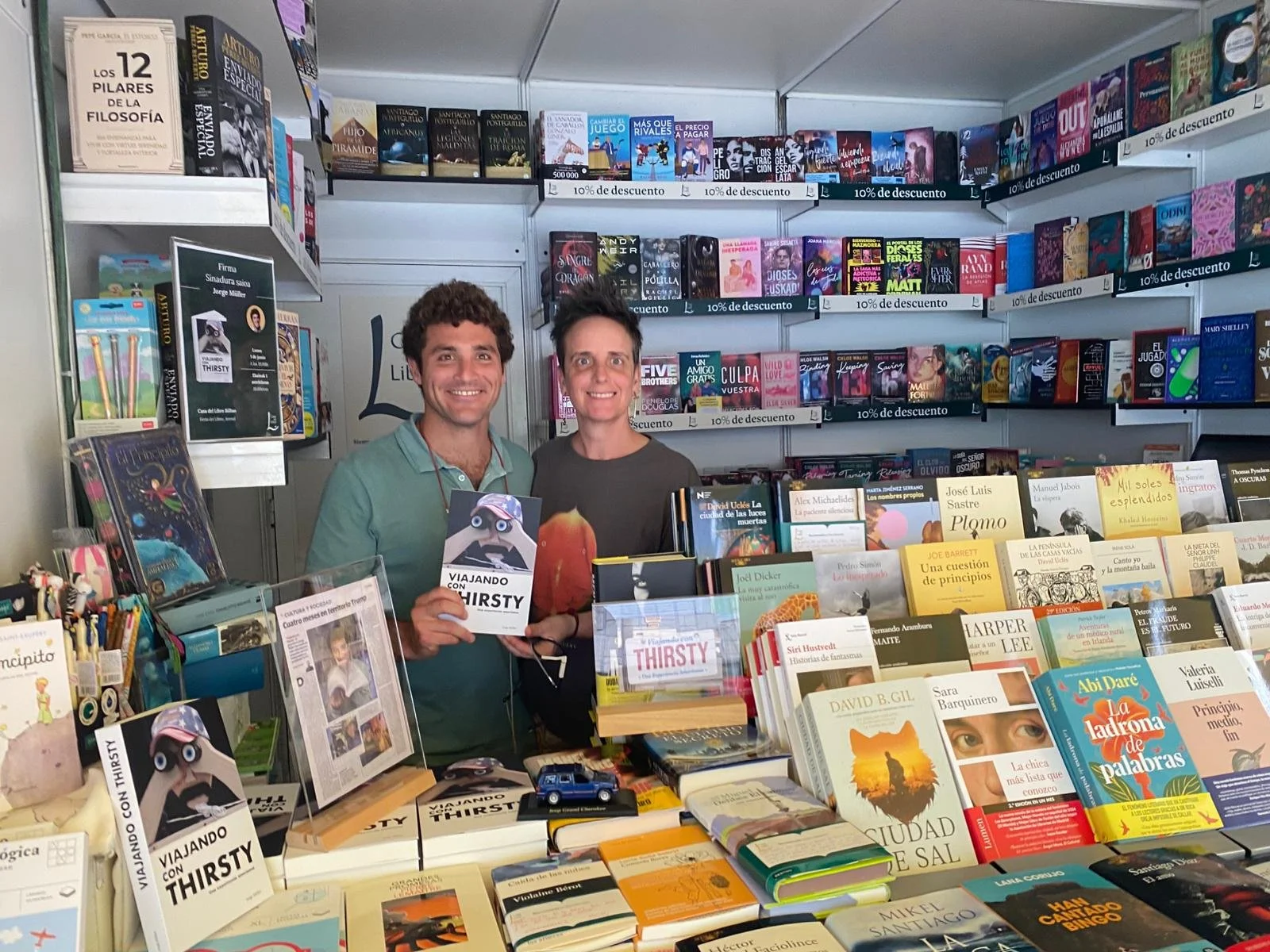
The book at the Casa del Libro stand during the Bilbao Book Fair.
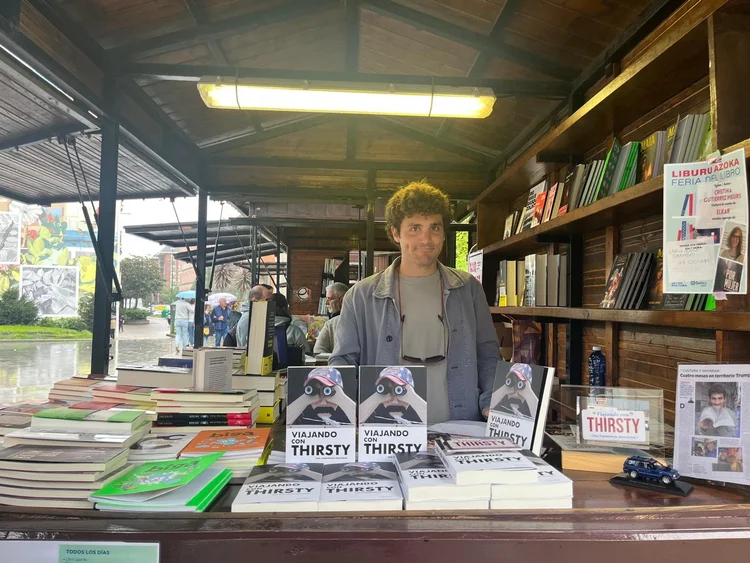 +
Feria del Libro de Getxo — Elkar
+
Feria del Libro de Getxo — Elkar
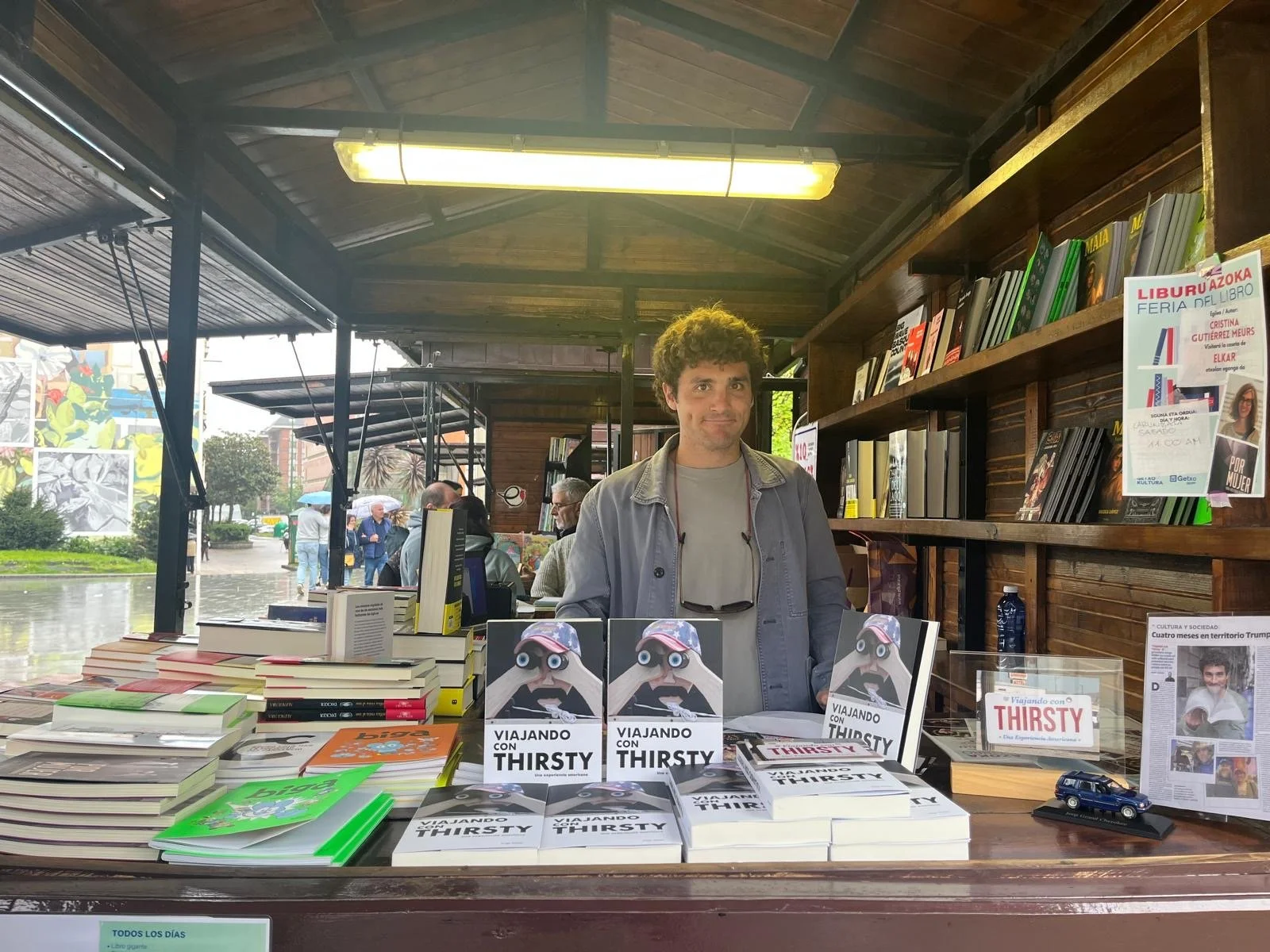
The book at the Getxo Book Fair.
 +
Día del Libro — Pernet
+
Día del Libro — Pernet
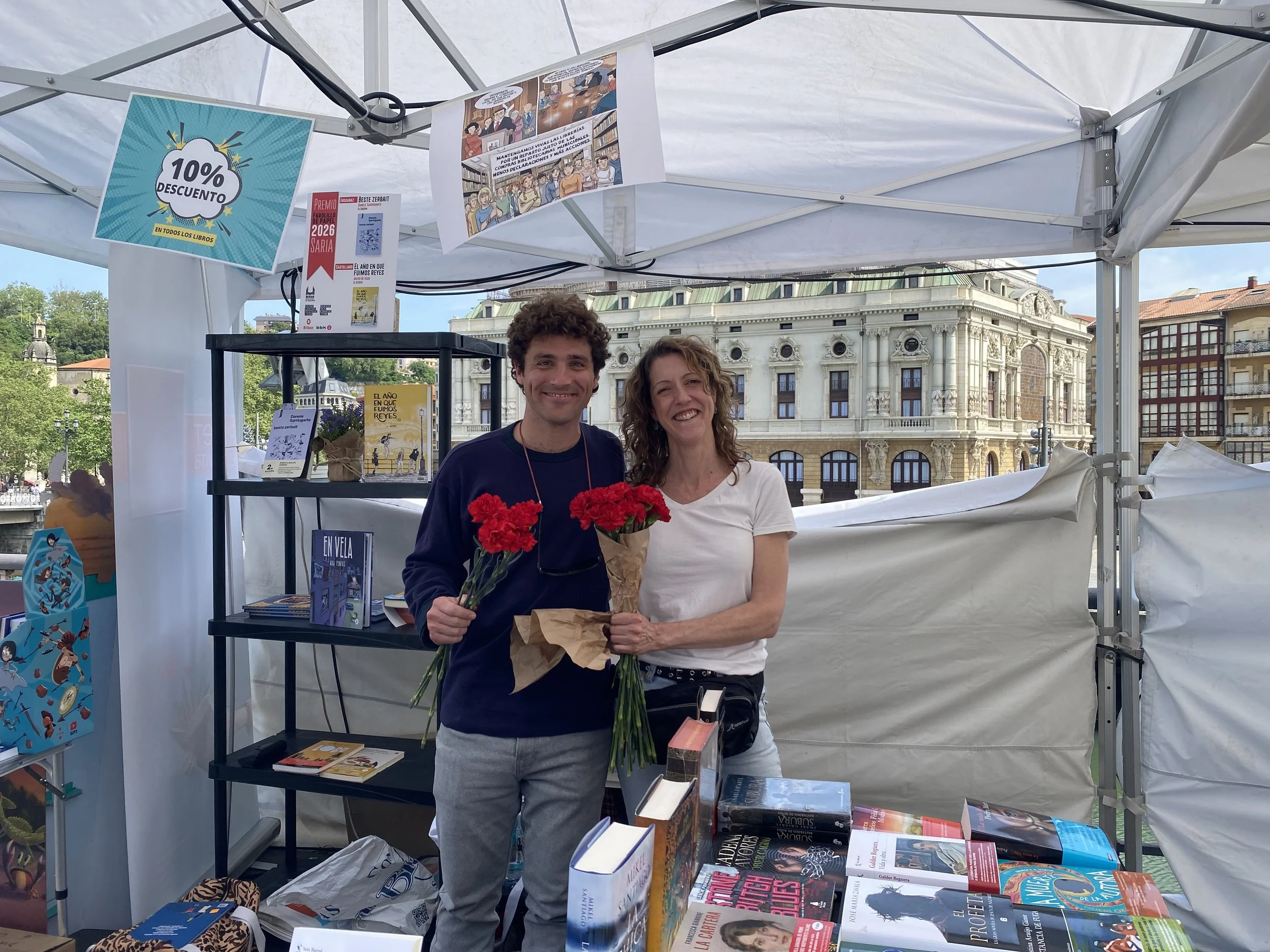
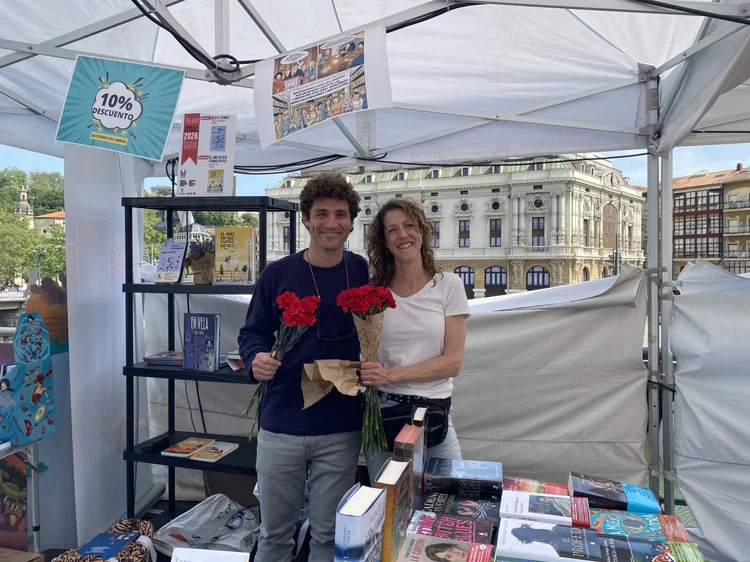
Signing at Bilbao’s Book Day, the city’s spring street fair for booksellers and publishers.
 +
Book launch
+
Book launch
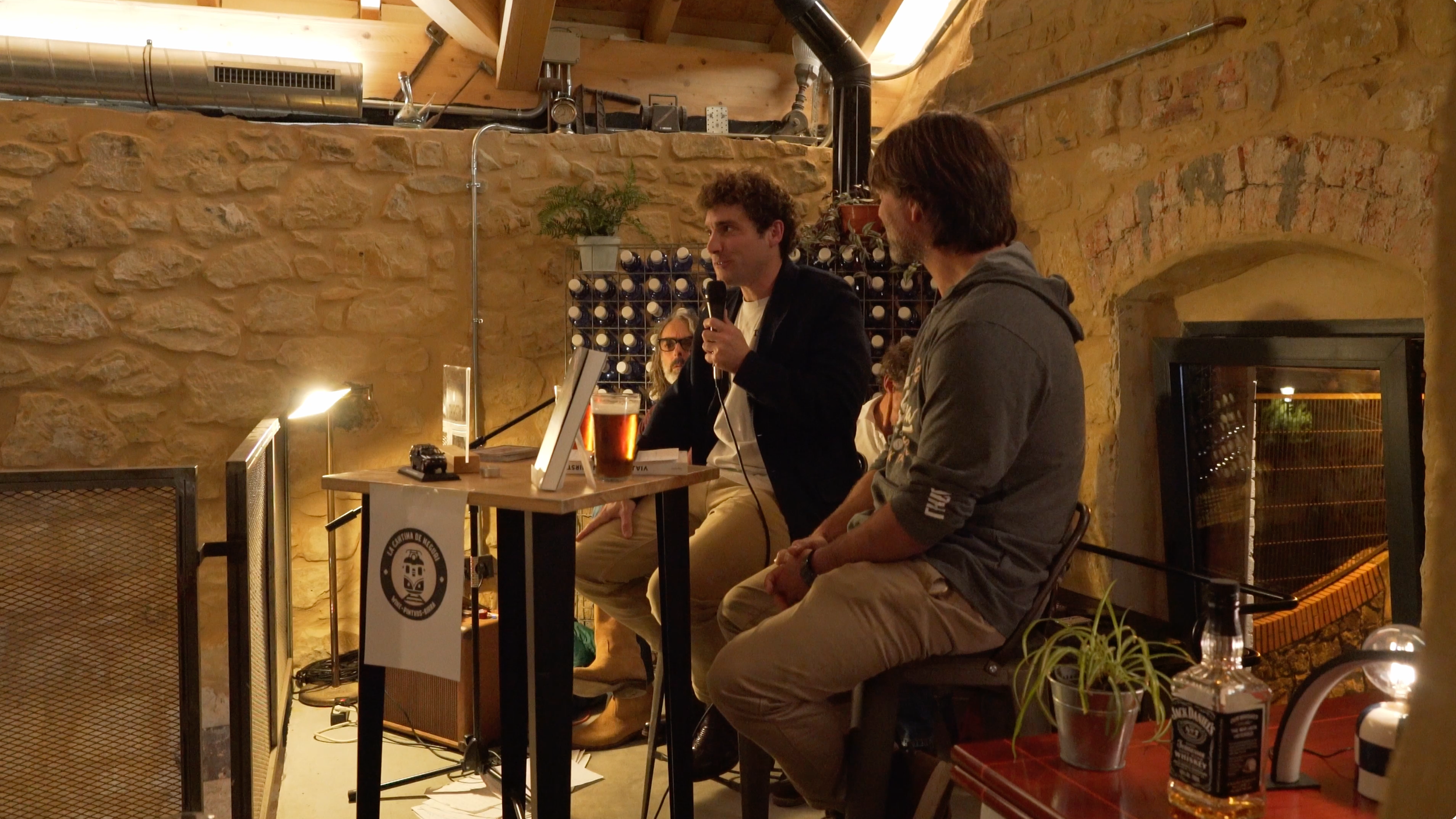
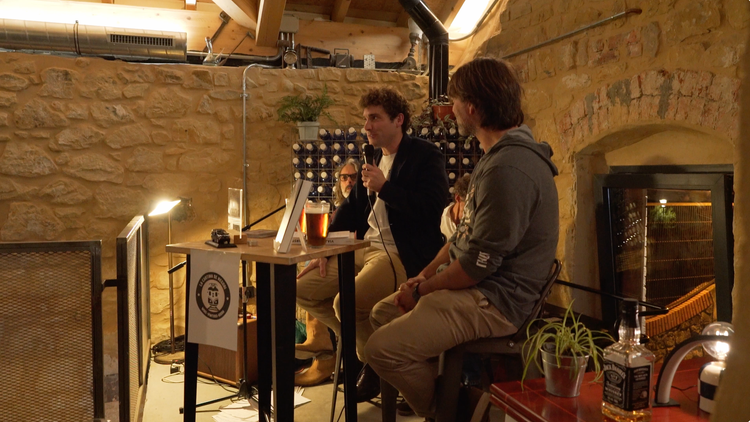
The launch of the Spanish edition in Bilbao, with live music and a symposium. 70 attendees.
Watch the full eventWhere to find this title
Viajando con Thirsty can be found at 72 bookstores across Spain, plus the main online retailers. Check live availability on Todostuslibros
Also listed on America Reads Spanish:
What’s inside the book?
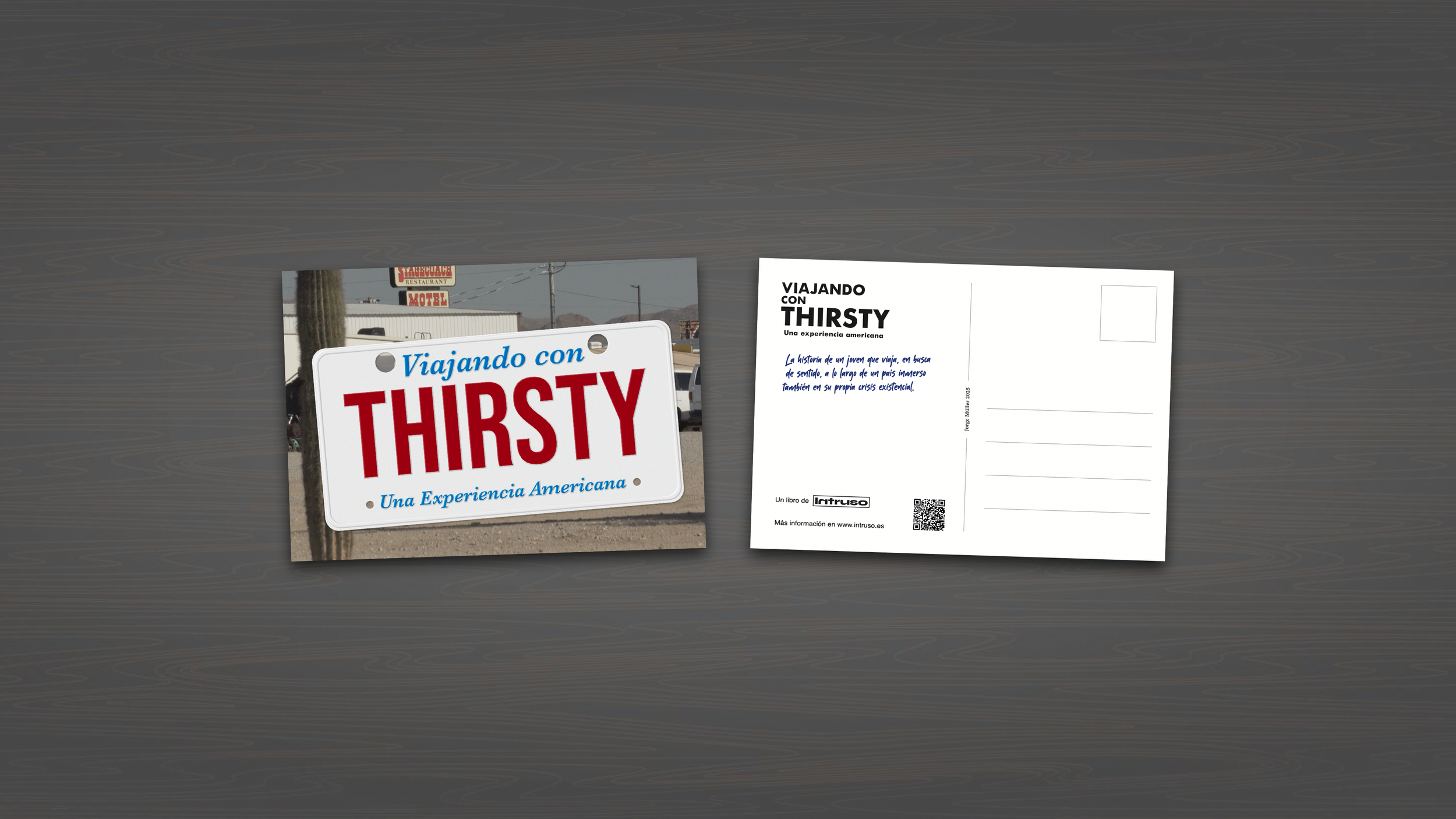
Read a sample in English
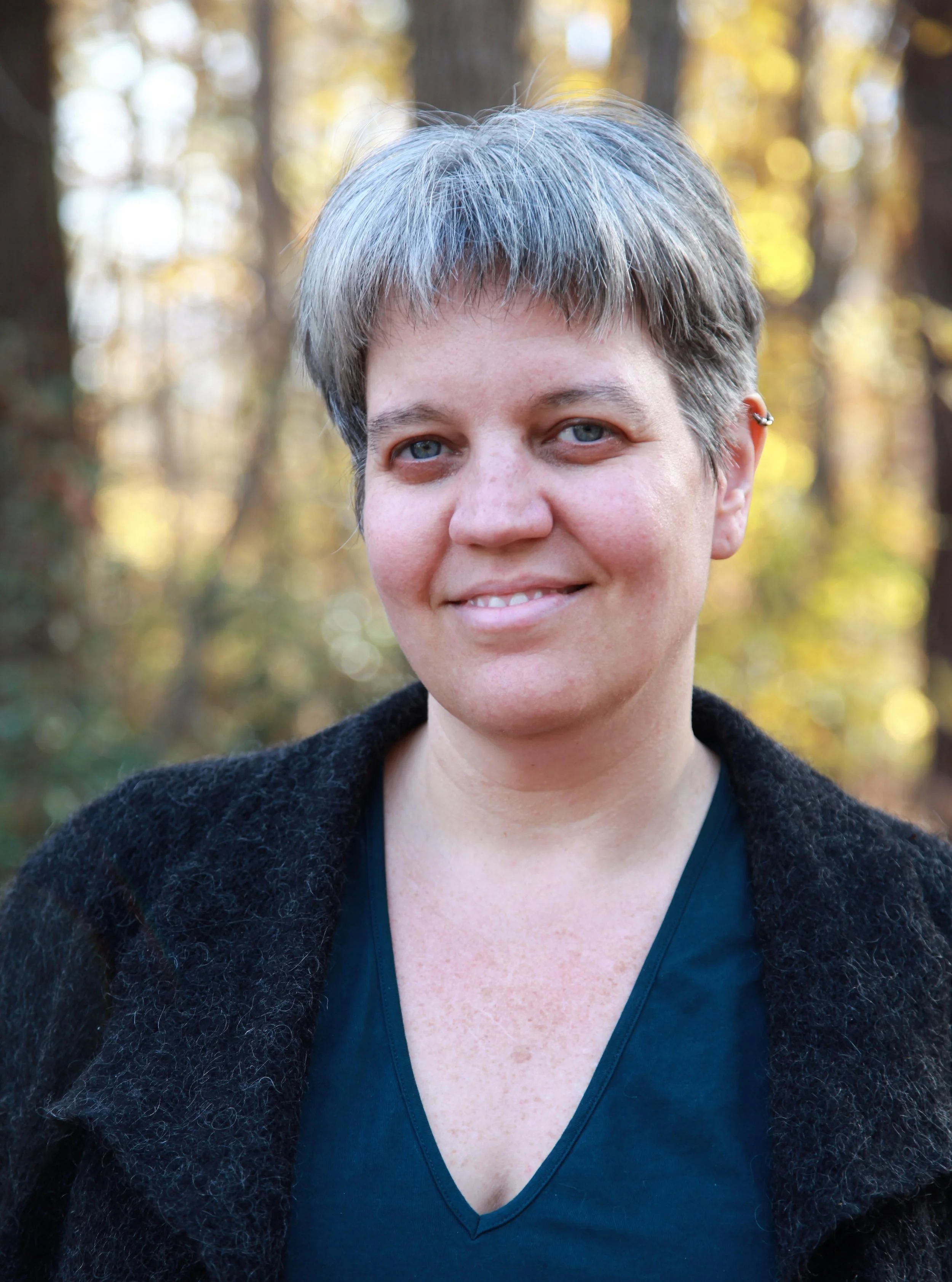
Andrea Rosenberg translates from Spanish and Portuguese and has published more than seventy books since 2009, for Riverhead, Archipelago, Europa Editions, Houghton Mifflin Harcourt and St. Martin's.
Her translation of Tomás González's Difficult Light was shortlisted for ALTA's National Translation Award in Prose, and Aura Xilonen's The Gringo Champion was runner-up for the Queen Sofía Spanish Institute Translation Prize. She has won five Eisner Awards for translation, the most recent in 2026, and holds an MFA in Literary Translation from the University of Iowa. She has also translated Manuel Vilas, Pablo Escobar, Pilar Quintana, Lina Meruane, Jorge Franco, Santiago Gamboa and Paco Roca.
Are you interested in this book?
We are a small press and are open to different forms of collaboration, from a rights sale to a co-edition or a distribution arrangement.
For queries regarding Foreign Rights, please contact Marta at: marta@intruso.es
We are also looking to acquire non-fiction titles, preferably from the US, Italy, or France, as well as Spanish-language titles from Latin America.
For queries regarding Distribution Agreements, please contact Carlos at: carlos@intruso.es
We are currently looking for distribution partners in the US for the Spanish editions of our books.